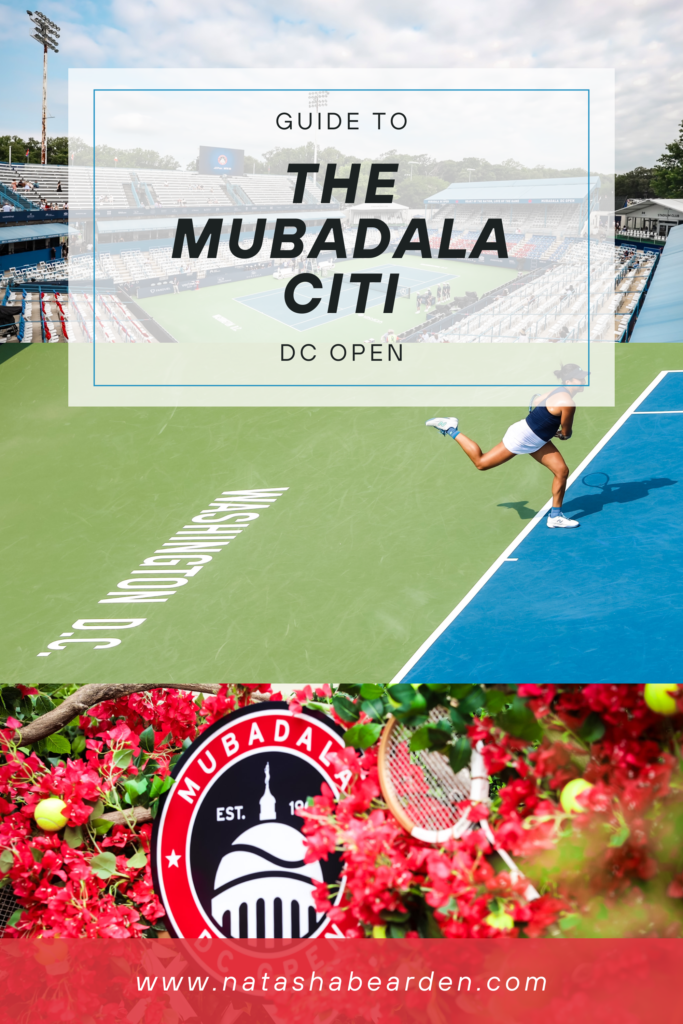
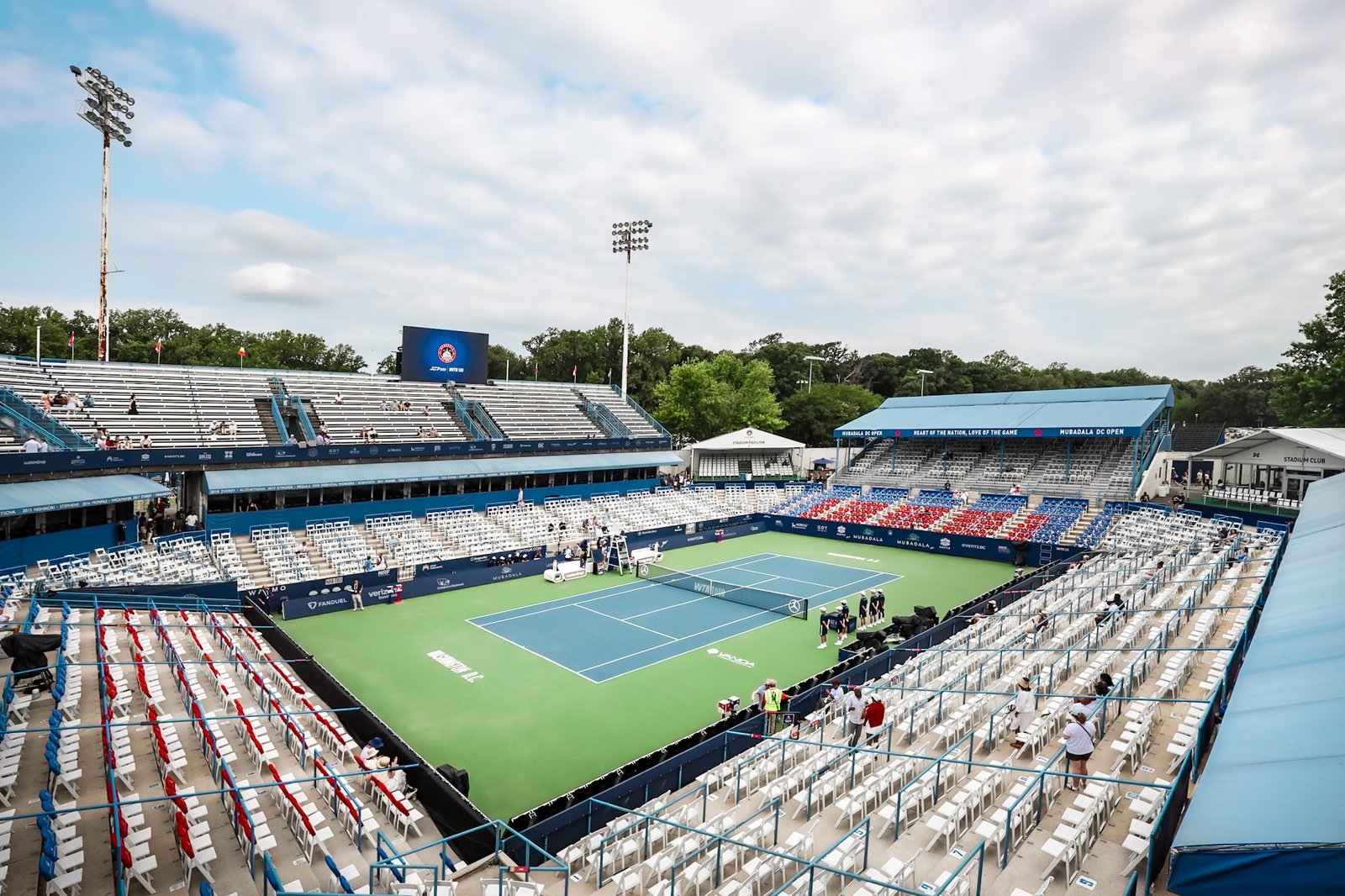
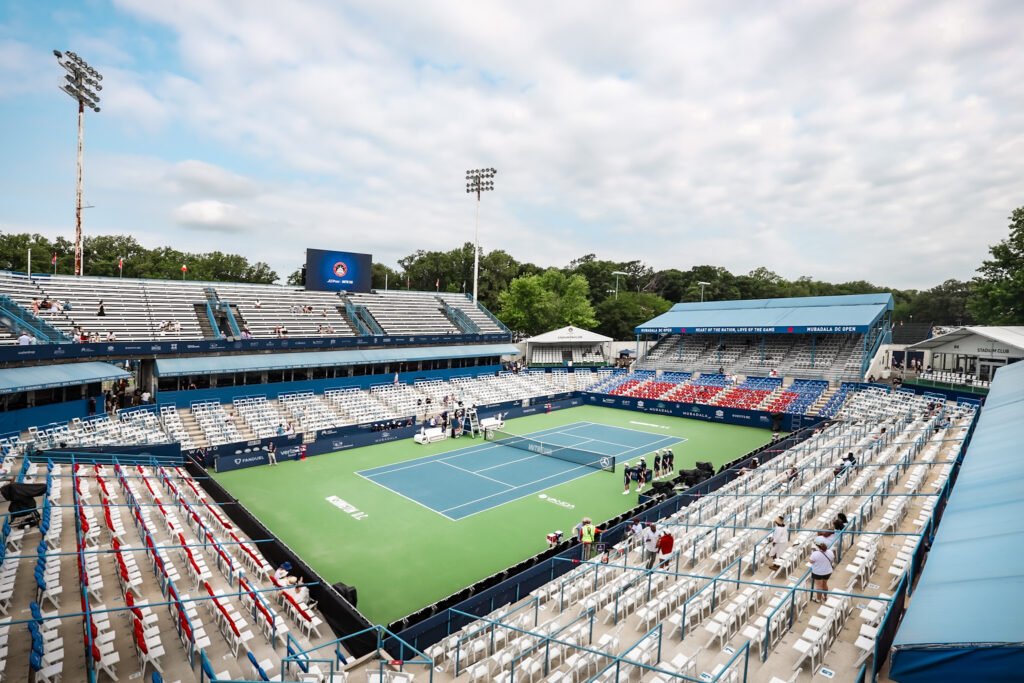
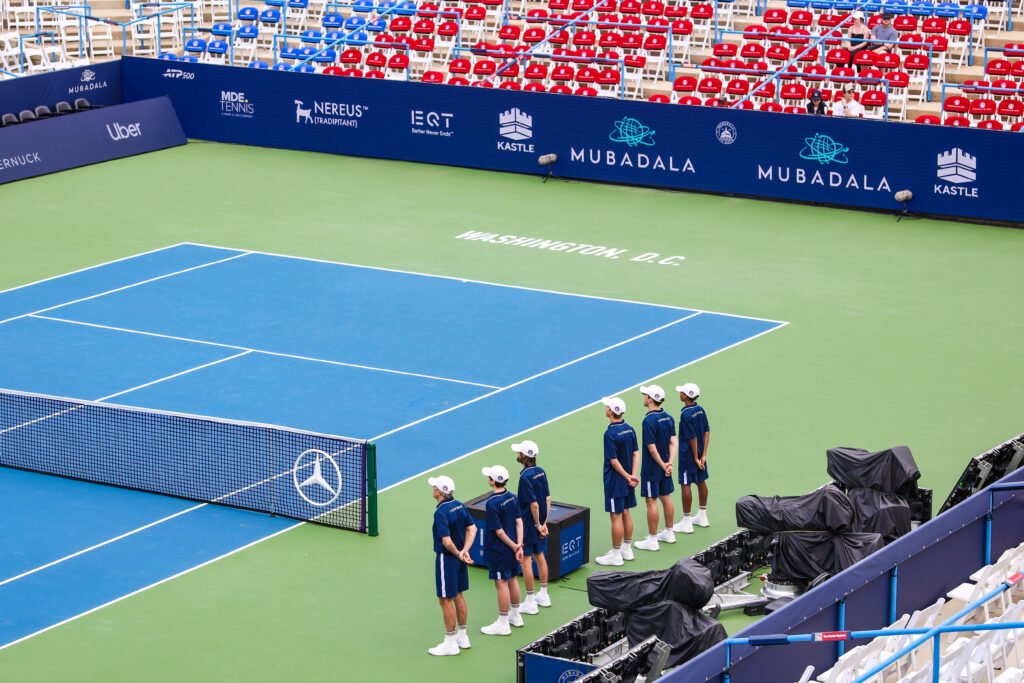
Every summer in late July, tennis players from around the world attend the Mubadala Citi DC Open which is one of the most prestigious tournaments outside of the Grand Slams. The tournament takes place at the William H.G. Fitzgerald Tennis Center In Rock Creek Park and features both men’s ATP 500 event and the women’s WTP event, making it the only combined 500-level tennis tournament in the world. In this post, I’ll break down the history of the Mubadala DC Open as well as provide a guide on how to navigate the grounds, photography tips, best times to attend, and more!
How It All Started
Tennis legend Arthur Ashe (1943 – 1993) was the first Black American man to win singles titles at the US Open in 1968, the Australian Open in 1970, and Wimbledon in 1975. He was born and raised in Richmond, Virginia and would play in the same junior tennis tournaments as his DC counterparts. One tennis player, Willis Thomas, grew up in Northwest DC and ended up being Ashe’s doubles partner in the American Tennis Association from 1954 to 1960. The two shared a very special bond given that they were one of few Black Americans playing tennis in a time when racial segregation was still prevalent in America.
Fast forward to 1968, Ashe was hanging out with his friend, tennis player Donald Dell, and discussed the idea of bringing a tennis tournament to the nation’s capital. This conversation sparked the beginning of a what would eventually become one of America’s most significant tennis events. In 1969, Ashe, Dell, and another man John A. Harris founded what was then called the Washington Star International.
How Has It Changed?
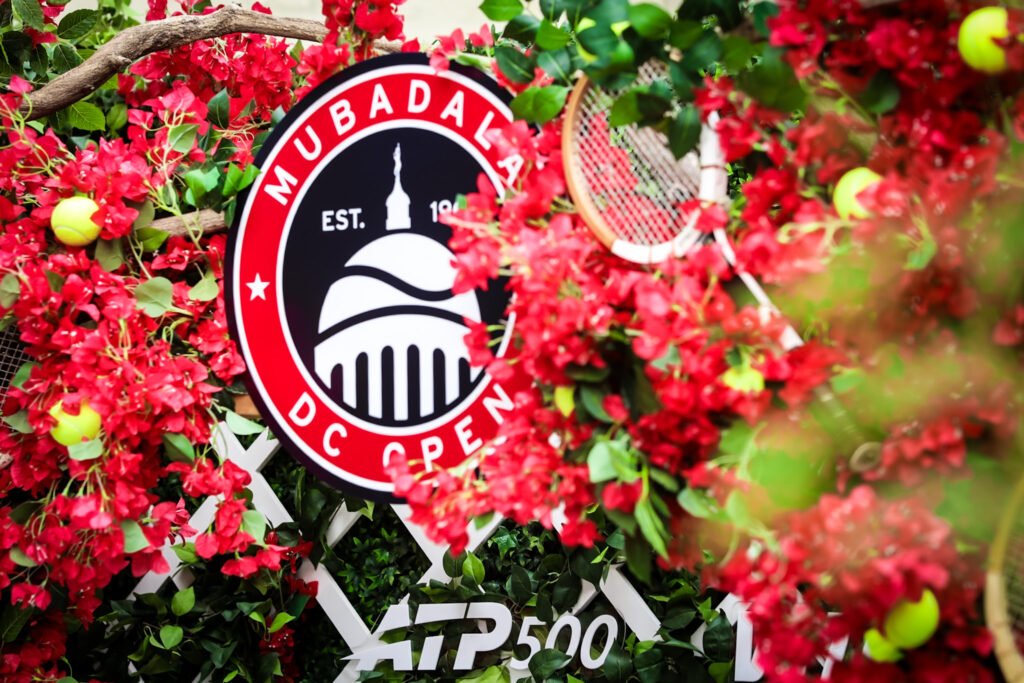
This tennis tournament wasn’t always called the Mubadala Citi DC Open and it’s undergone many name changes over the years. Such sponsor names include:
- Washington Star International (1969 – 1981)
- Sovran Bank Classic (1982 – 1991)
- Legg Mason Tennis Classic (1992 – 2011)
- Citi Open (2012 – 2023)
- Mubadala Citi DC Open (2024 – Present)
The most significant change in this tournament’s history was the transition from clay courts to hard courts (concrete or asphalt topped with acrylic coating and silica sand). Originally, outdoor green clay was used because it was more common in the eastern United States, was easier on players’ bodies, and was the style of American tennis during that time period. Furthermore, green clay reduced surface stress on joints and allowed for longer rallies and strategic play. By the mid-1980s, hard court became the standard surface in American tennis mainly because the US Open switched from clay to hard court in the late 1970s. The tournament’s transition to hard court in 1986 ended being a huge benefit for tennis players as they prepared for the US Open a few weeks away.
The Engineering Behind Tennis
You’d be very surprised to see the amount of engineering involved in tennis. As a person who studied civil engineering in undergrad, I couldn’t help but notice the amount materials science engineering, physics, and geometry is in tennis.
As mentioned before, the Mubadala Citi DC Open originally titled the Washington Star International, played on green clay at first before switching to hard court in 1986. This was very intentional and involved engineering, economics, and physical impacts. For one, clay court requires a lot of maintenance including daily watering, rolling to keep a level surface, sweeping, replacing of loose clay, and frequent repairs after rain. After heavy rain, clay courts become very soft due to its ability to absorb water and that results in courts becoming unplayable.
Hard court, on the other hand, is a layered engineering system consisting of the following:
- Compacted subgrade – native soil that is compacted using heavy equipment
- Crushed stone base – crushed and compacted aggregate placed over the soil
- Asphalt or concrete base – provides structural support and a level playing surface
- Acrylic resurfacer – fills small pores in the asphalt or concrete
- Colored acrylic surface coating – blue, green, or other court colors made from water-based acrylic resins and silica sand
Because of this layered engineering system, hard court doesn’t require as much maintenance and only needs occasional cleaning, resurfacing every 5-10 years, and crack repairs as needed. Hard courts also drain faster, so when it rains, matches can resume soon after. In addition to that, the layers absorbing impact helps reduce stress on body, provides more consistent play, and produces faster rallies. Overall, this is a huge benefit for players as they prepare for the US Open.
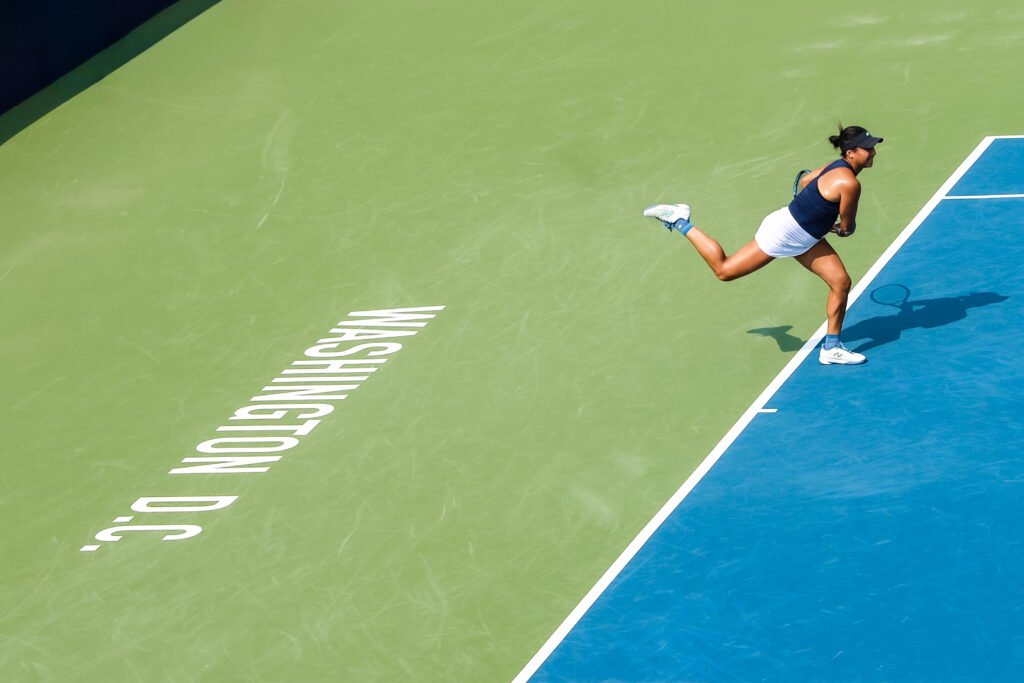
Tennis balls may seem like any other ball, but it is also a product of engineering. They consist of air/gas, a rubber core, and a fuzzy yellow exterior (felt) and contribute to bounce height, speed, spin, and more. You may notice that players change balls often during matches and that’s because the felt wears down, internal pressure decreases, bounce changes, and speed increases as felt gets smoother.
If you’ve ever wondered why tennis courts are 78 ft long, the answer lies in geometry. The court’s dimensions are carefully engineered to balance reaction time, serve speed, ball trajectory, and player movement. They also allow players to use tight angles, cross-court, down-the-line and other techniques to not only out power, but out maneuver their opponents.
Best Times to Attend
There really isn’t a right or wrong time to attend the Mubadala Citi Open because of the amount of talent on the courts, however some times are better than others depending on the day you’re going and whether or not you’re attending the qualifying matches or the main draw. Qualifying rounds won’t be as crowded as the main draw since those players are usually ranked outside of the top 100. Players ranked within the top 100 are given direct entry into the main draw without having to play preliminary rounds.
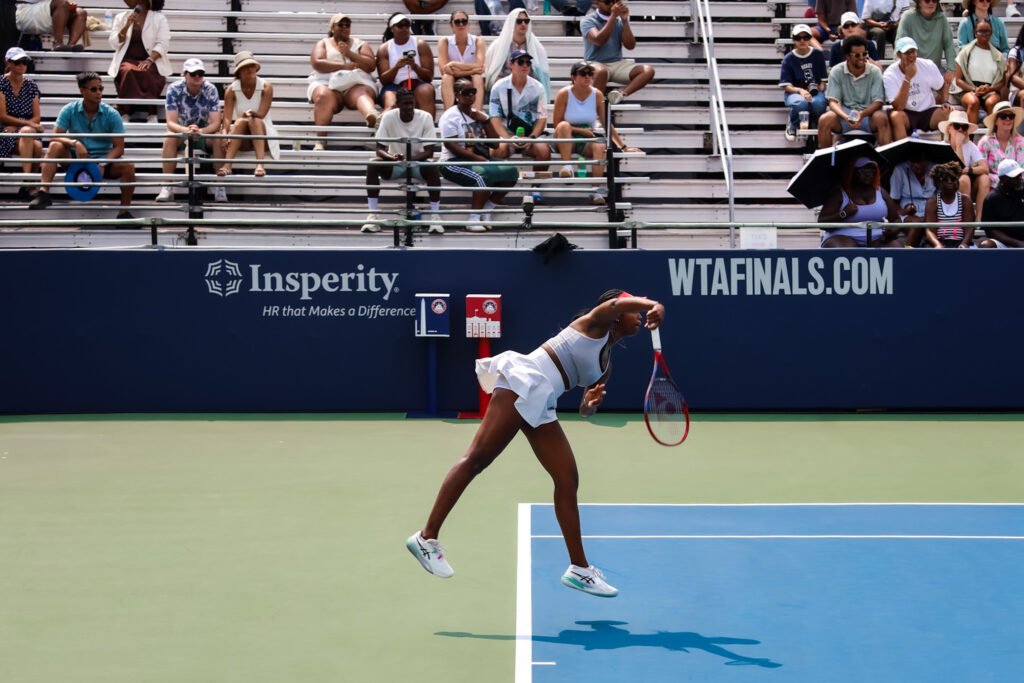
With that said, don’t sleep on players outside of the top 100. Some of them end up beating top seed players and go on to have successful tennis careers. If you are more of a tennis enthusiast like I am and don’t want to be bothered with crowds, then the qualifying rounds will be perfect for you. A bonus is that the tickets are usually cheaper!
How Tennis Scoring Works
Tennis scoring can be confusing to those who are new to the sport, but I promise it’s not as bad as it may seem. Watching tennis matches on TV will help you better understand the scoring, but I’ll give a brief overview so that you’ll know by the time you watch in person.
- Points
- 0 = Love
- 15
- 30
- 40
- Game
- Both players reaching 40 is called deuce
- From deuce, a player needs to win the next two consecutive points would win the game
- Games
- To win a set, a player must win by 6 games
- Examples:
- 6-0
- 6-1
- 6-2
- 6-3
- 6-4
- At 6-5, a player must win by 2 games and the first player to 7 wins
- Tiebreak
- Tiebreak is when both players win 6 games each, making the score 6-6
- The first player to 7 points wins the set 7-6
- If it continues on to 7-7, 8-8, etc, then one player has to win by 2 consecutive points
- Matches
- ATP and WTA matches at the Mubadala Citi DC Open are best of three sets, meaning a player must win two sets to win the match
- Common Techniques and Terminology
- Ace
- Volley
- Drop Shot
- Slice
- Lob
- 1st Serve / 2nd Second Serve
- Forehand
- Backhand
- Fault
- Let
- Unforced Errors
Navigating the Grounds
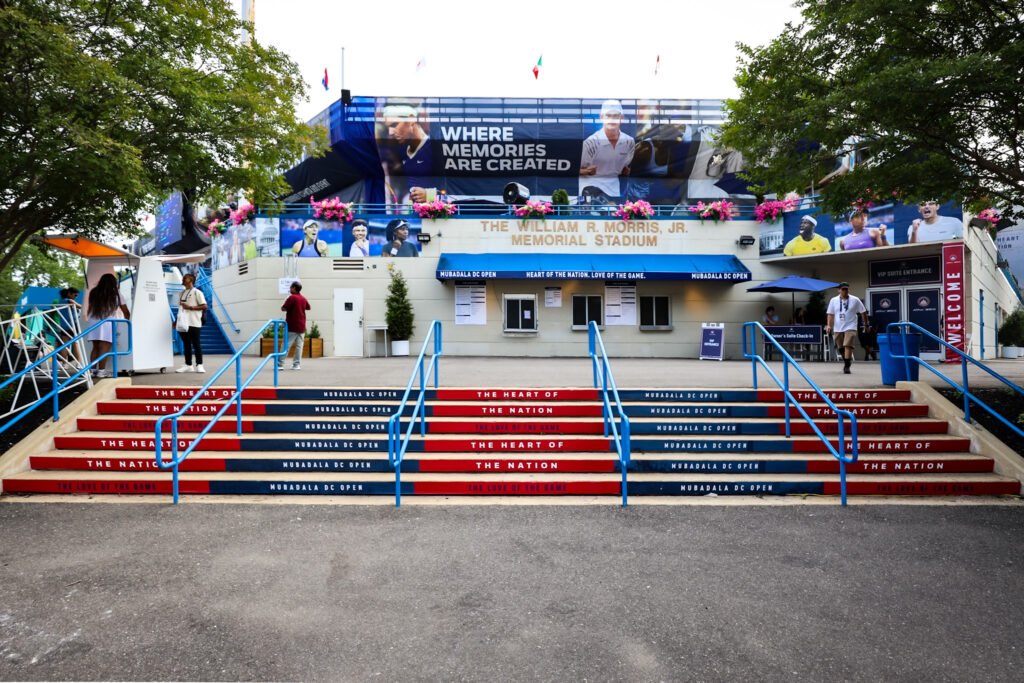
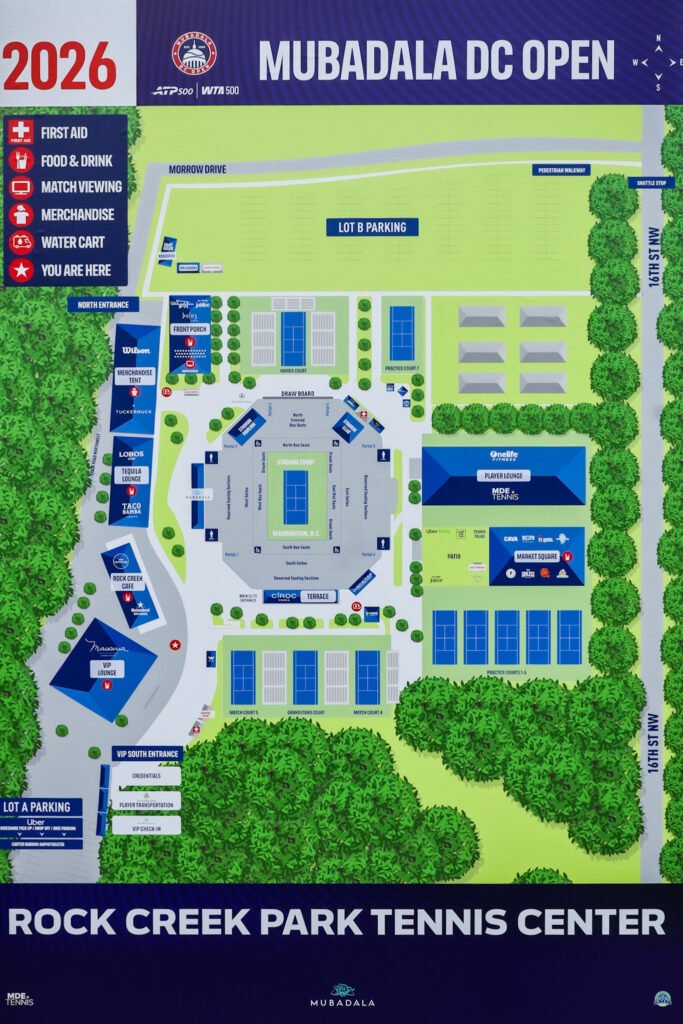

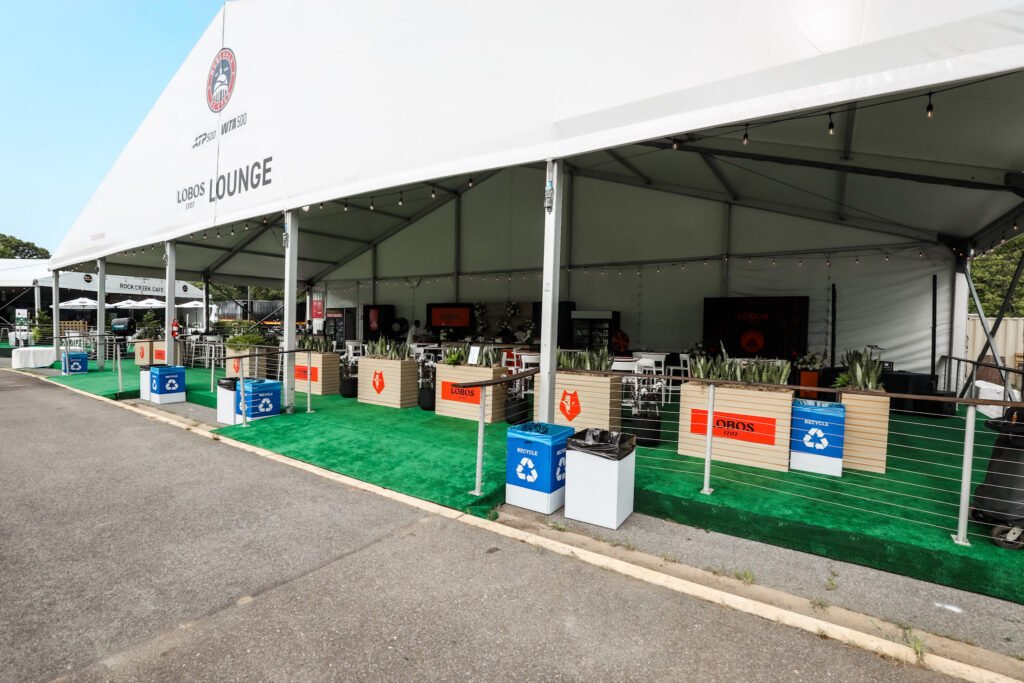
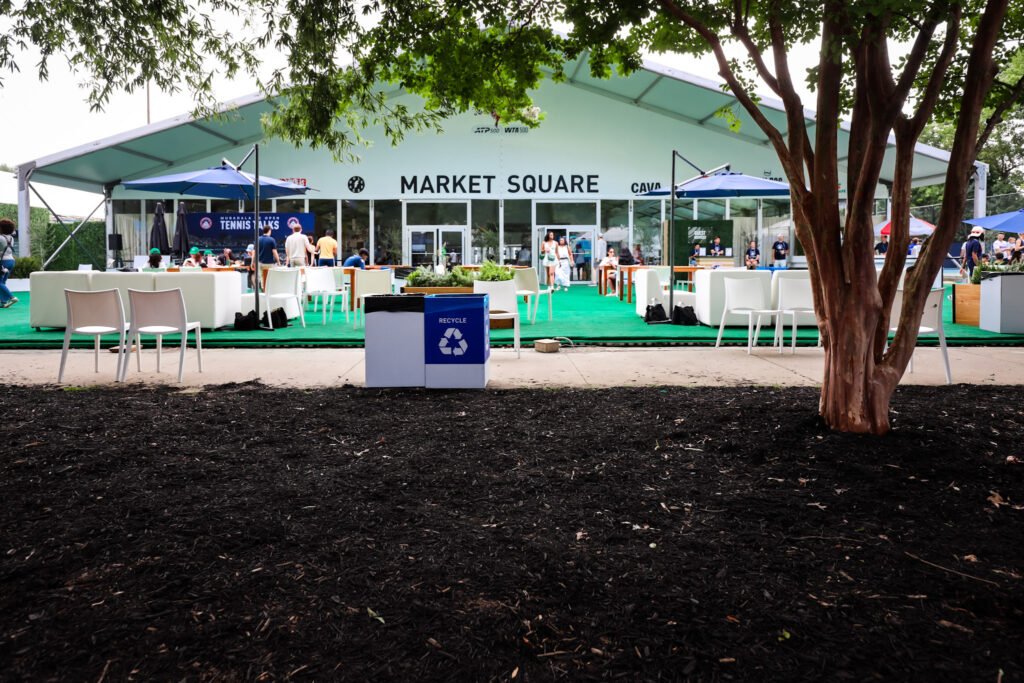
Policies
It’s been a few years since I last attended the Citi Open and a few things have changed since then. Here are a few things to be on the lookout for:
- Clear Bag Policy
- Backpacks and purses are prohibited
- Clear bags must be no larger than 12″ x 12″ x 6″
- Non-clear bags must not exceed 8″ x 5″ x 1″
- Fanny packs must not exceed 8″ x 5″
- If you are also a photographer and want a bag to put your lenses in, see bag below that I bought from Amazon: Handy Laundry Clear Bag for Stadium Events – Large Transparent Tote – Clear Purse for Women, Work, Beach & Shopping
- Food and Beverages
- Outside food and beverages are not allowed on tournament grounds
- One unopened see-through water bottle or empty non-see-through container up to 1 liter is allowed
- Photography
- Cameras are allowed however flash photography during matches is prohibited
- Electronics
- Laptops, iPads, professional recording equipment, drones, etc are prohibited


Where To Purchase Tickets
Tickets can be purchased at seetgeek.com or by downloading the SeatGeek app. The app allows you to purchase a round trip shuttle pass, exclusive lounge access, and upgraded seats. Tickets tend to sell out fast, so I highly recommend getting tickets about a month in advance.
How to Get Here
Arriving to the Citi Open can be a hassle, however there are a few different ways you get to the tournament.
- Car
- The grass lot closest to the north entrance is first-come, first-served and the sooner you arrive, the higher chances of finding parking
- Cost: $50
- Shuttles
- The Official Tournament Shuttle picks up at 1400 Irving St. NW (near the Columbia Heights Metro Station)
- Purchase the ticket through SeatGeek prior to riding shuttle
- Cost: $10
- Drop-off: Rock Creek Park Tennis Center
- Hours: Starts at 7:00am and runs every 30 minutes until the final match ends
- Metro Buses
- The following metro buses drops off at 16th Street and Colorado Avenue NW, leaving a short walk to the tennis center:
- S2
- S4
- S9 (Express)
- The following metro buses drops off at 16th Street and Colorado Avenue NW, leaving a short walk to the tennis center:
Arthur Ashe’s Legacy
The Mubadala Citi DC Open is a lot more than a stop on your summer calendar. It’s living in Arthur Ashe’s vision of having a professional tournament in the nation’s capitol where anyone can witness excellence and feel a sense of belonging. Back then, DC had one of the largest Black populations in the country, but opportunities to play or watch were extremely limited due to segregation. Ashe believed that tennis is for everyone, not just those with private club memberships. His advocacy helped bring more visibility to the sport and provide accessibility in public communities.
Furthermore, the Citi Open gives back to the local community through their primary charitable beneficiary, the Washington Tennis & Education Foundation (WTEF). This non-profit provides the underserved youth access to tennis instruction, academic enrichment, and life skills. More than 50 years after its founding, the Mubadala Citi DC Open remains a testament to Arthur Ashe’s vision that tennis can inspire education, build communities, and create opportunities for generations to come.
Thanks for reading!